


From Chaos to Calm: The Urban Pet Play Ltd Training Playbook for Real-World Pets

Training isn’t a single moment where your pet “gets it” and life becomes a montage of perfect walks and immaculate carpets. Training is messier. It’s repetition on rainy mornings. It’s the split-second decisions you make when the doorbell rings. It’s the quiet, invisible work of shaping habits—yours and theirs—until the household feels lighter, calmer, more predictable.

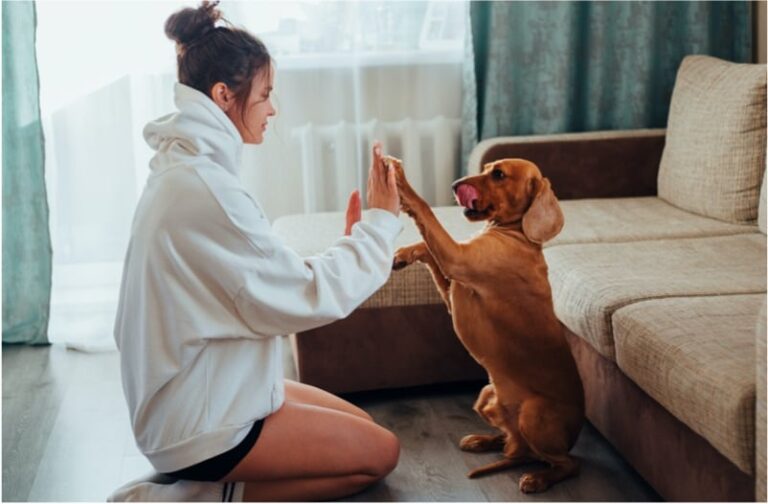
At Urban Pet Play Ltd, we see training as more than commands. It’s communication. It’s confidence. It’s welfare. Whether you’re housebreaking a new puppy, teaching basic obedience, or trying to rewrite a frustrating behavior pattern, the goal is the same: help your pet succeed in a human world without losing their joy.

Below are practical training techniques that work in real homes—with real distractions.


The Training Mindset That Changes Everything: Clarity Beats Control

Most training problems aren’t about stubborn pets. They’re about unclear expectations, inconsistent reinforcement, and environments that are simply too hard.

Think in “ABC”: Antecedent → Behavior → Consequence

  • Antecedent: What happened right before? (Doorbell, visitor, leash, your phone buzzing.)
  • Behavior: What did your pet do? (Jumped, barked, peed, pulled.)
  • Consequence: What happened after? (Attention, escape, food, play, relief.)

When you can describe the ABC, you can change the outcome. Training becomes less emotional and more strategic.

Practical advice: set your sessions up to win

  • Train when your pet is not overflowing with energy or stress.
  • Start in low-distraction spaces, then “level up” gradually.
  • Reinforce what you want while it’s happening, not five seconds later.

Thought-provoking insight: Training isn’t about making your pet “obey.” It’s about making the right behavior easier and more rewarding than the wrong one.


Housebreaking That Sticks: Build a Bathroom Routine, Not a Guessing Game

Housebreaking is part biology, part logistics, part pattern recognition. Accidents aren’t moral failures—they’re information.

The fundamentals: frequency + supervision + reinforcement

  • Take them out on a schedule: first thing in the morning, after eating, after play, after naps, and before bed.
  • Supervise or confine: if you can’t watch, use a crate or a safe pen area (not as punishment—just management).
  • Reward immediately after they go: treat/praise within 1–2 seconds of finishing.

Use a cue and a “go-to spot”

Bring them to the same outdoor area and calmly say a cue like “toilet” or “busy.” The environment itself becomes part of the learning.

What to do when accidents happen

  • Interrupt gently if caught mid-act: a calm “oops” and guide outside. No shouting, no chasing.
  • Clean properly: use an enzymatic cleaner to remove scent traces (standard cleaners often don’t).
  • Revisit your plan: accidents mean the schedule was too loose, supervision was too light, or stress/distraction was too high.

Thought-provoking insight: Housebreaking is less about teaching “don’t go inside” and more about teaching “here is the predictable, safe place to go—and it pays.”


Basic Obedience: The Small Skills That Create a Big Life

Obedience isn’t a performance; it’s a toolkit for living together. The best cues don’t just make you proud—they prevent problems.

Start with the “Life Skills Five”

  1. Name response / attention (“Look”): “Check in with me.”
  2. Sit: impulse control in a tiny package.
  3. Down: calm body, calm brain (often).
  4. Stay / Wait: safety at doors, curbs, and food bowls.
  5. Recall (“Come”): the most important cue you’ll ever teach.

Training technique: mark and reward

Use a marker (“Yes!”) or a clicker to pinpoint the exact moment they succeed, then reward. This speeds learning dramatically.

Make obedience functional, not formal

Practice “sit” before clipping the lead, “wait” at the door, “down” during coffee, “come” for dinner. Skills that get used get remembered.

Practical tip: Keep treats small and varied. Many pets work better for “tiny, frequent paychecks” than one big snack.

Thought-provoking insight: Basic obedience is really “stress management.” The more your pet understands what to do, the less they have to improvise with jumping, barking, or pulling.


Behavior Modification: Change the Emotion, Not Just the Action

Behavior Modification: Change the Emotion, Not Just the Action

Obedience can stop a behavior in the moment. Behavior modification changes what’s driving it underneath—fear, frustration, excitement, insecurity, habit.

Two approaches, two outcomes

  • Suppression: “Don’t do that.” (Often creates confusion or increased stress.)
  • Replacement: “Do this instead.” (Creates clarity and lowers conflict.)

Replacement behaviors are gold. Examples:

  • Jumping → sit for greeting
  • Barking at door → go to mat
  • Chewing furniture → chew toy + enrichment
  • Pulling → check-in + reward near your leg

Use desensitization + counterconditioning (DS/CC)

If your pet reacts to something (dogs, strangers, noises), the aim is:

  • Desensitize: expose at a low intensity they can handle
  • Countercondition: pair that trigger with something great (treats, play)

Over time, the trigger predicts good things instead of stress.

Watch the threshold

Training only works when your pet can still think. If they’re lunging, panicking, or screaming-barking, you’re too close, too fast, or too long. Increase distance, reduce intensity, shorten sessions.

Thought-provoking insight: Lasting behavior change happens when your pet feels safe enough to learn. Calm isn’t a command—it’s a condition.


The Urban Training Reality: Distractions, Doorbells, and Doing It Anyway

Cities are training on hard mode: scooters, lifts, stairwells, crowded pavements, echoing hallways, delivery drivers, and surprise encounters.

Build “urban proofing” into your plan

  • Train in layers: home → hallway → quiet street → busy street → parks.
  • Teach a default “go-to” behavior: “Touch” (nose to hand) or “look” is great when distractions spike.
  • Create a calm station: a mat/bed cue (“place”) for visitors, meals, and work-from-home hours.

Make reinforcement part of your lifestyle

Keep treats in a jar near the door, a pouch on walks, a few in your pocket. Reward the moments you normally ignore: calm passing, quiet waiting, choosing you over chaos.

Consistency without perfection

If five people give five different rules, your pet will choose the rule that pays best. Agree on:

  • where the pet sleeps
  • how greetings happen
  • whether begging is reinforced
  • what “off” means
  • who handles walks/training and how

Practical tip: Aim for 3–5 minutes of training, 1–2 times a day. Short sessions keep motivation high and frustration low.

Thought-provoking insight: In a busy world, your pet doesn’t need you to be strict. They need you to be predictable.


Training Is a Relationship You Can Measure

Conclusion: Training Is a Relationship You Can Measure

Housebreaking is routine and timing. Basic obedience is a shared language. Behavior modification is empathy with a plan. And in the urban environment, training isn’t a “nice-to-have”—it’s how pets stay safe, calm, and connected to the people they live with.

Start small. Reward generously. Raise difficulty slowly. And remember: every time your pet chooses the right behavior, they’re not just learning a trick—they’re learning how to live well in your world.


SEO Keywords

Urban Pet Play Ltd, pet training techniques, dog training tips, puppy housebreaking, housetraining puppy, toilet training dog, basic obedience training, teach sit stay come, recall training, leash manners, behavior modification for dogs, dog reactivity training, counterconditioning dogs, desensitization training, stop jumping up training, barking at door training, training tips for pet owners, urban dog training, pet behaviour advice

Tags

What do you think?

Leave a Reply

Your email address will not be published. Required fields are marked *

Related Articles