Premium Pet Supplies Online | Urban Pet Play Ltd

Looking for help with your order or have a question about our products? At Urban Pet Play Ltd, we’re here to make your online pet shopping experience smooth, simple, and stress-free.
Our Store Location
- 66 Paul Street, London, England, EC2A 4NE
- 0330 043 0655
- info@urbanpetplay.co.uk
- Everyday 09:00 AM - 22:00 PM
Follow Our Instagram
@urbanpetplay



A Small Glass World Done Right: Spotlighting the PawHut 50L Glass Turtle Tank with Basking Platform, Easy Drainage & Strip Thermometer
admin
March 3, 2026
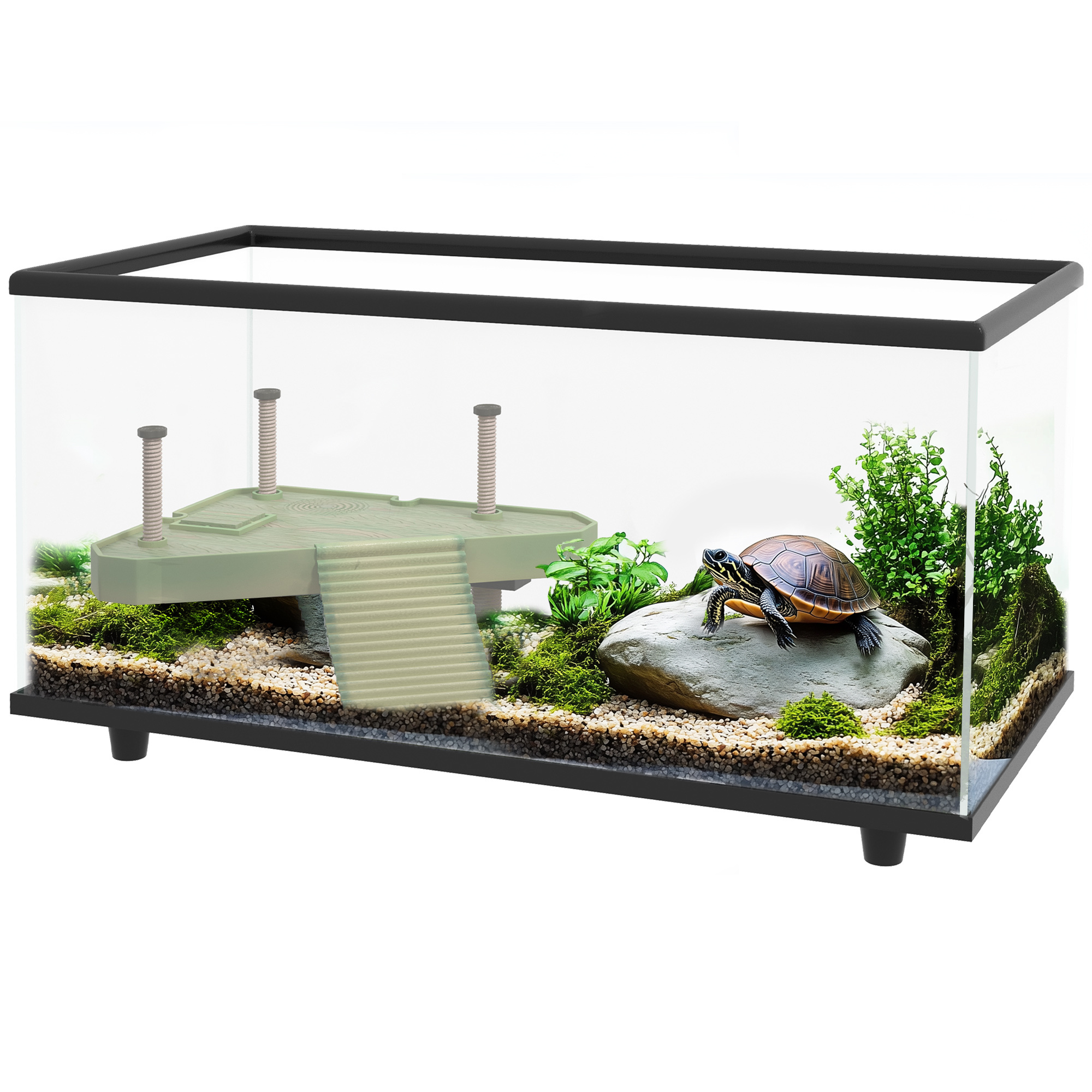
A Small Glass World Done Right: Spotlighting the PawHut 50L Glass Turtle Tank with Basking Platform, Easy Drainage & Strip Thermometer
There’s a particular kind of heartbreak that comes from buying an enclosure that looks right but behaves wrong. The glass gleams, the platform is perched like a little island, the product photos whisper “low effort, high serenity”—and then you’re living with cloudy water, temperature drift, awkward cleaning, and an animal that’s either hiding too much or basking too little.
That’s why a turtle tank isn’t just an aquarium. It’s a system: heat, light, water quality, access, routine, and maintenance—all happening in a box that magnifies small mistakes into big consequences.
You asked for a product spotlight on the PawHut 50L Glass Turtle Tank Aquarium with Basking Platform, Easy Drainage, Strip Patch Thermometer. The document you provided is about smart pet cameras and automatic feeders rather than reptile/aquatic equipment, and it doesn’t include PawHut-specific engineering details or testing—so I can’t claim how well this exact model holds heat, how robust the basking platform is, or how effective the drainage is in practice.
What I can do—aligned with the document’s “helpful vs hype” philosophy—is break down what these features should accomplish, how to evaluate them like a pro, and how to build a calmer, more predictable care routine around a 50L turtle setup.
The 50L Reality Check: What This Tank Size Can Support (and What It Can’t)
A 50L glass tank can be a practical starting point for some aquatic or semi-aquatic setups, but it’s not “one-size-fits-all”—especially for turtles, which grow, produce a lot of waste, and need stable environmental zones.
Thought-provoking insight: volume is not just space—it’s stability
More water volume usually means:
- slower temperature swings,
- more dilution of waste,
- and fewer sudden “everything went wrong overnight” moments.
A smaller volume can work, but it demands more consistency—the same idea your document applies to automatic feeders: predictability is the real win.
Practical advice:
- Treat 50L as a starter or smaller-species size unless you already know your turtle’s adult needs.
- Plan your “upgrade path” early so you aren’t forced into a rushed, stressful move later.
(If you tell me the species and size/age of the turtle, I can help you judge whether 50L is likely to be temporary or workable longer-term.)


The Basking Platform: It’s Not a Bonus—It’s the Behavioural Anchor
A basking platform is the hinge between two worlds: water and land. For many turtles, basking supports:
- thermoregulation,
- drying (shell health),
- and “reset” time out of the water.
But not all platforms are equally usable. The best basking area is:
- easy to climb onto (traction matters),
- large enough to sit fully supported,
- positioned so lighting and heat actually reach it.
Thought-provoking insight: if basking doesn’t happen, it’s usually an engineering problem
People often interpret “my turtle doesn’t bask” as temperament. Sometimes it is. Often it’s logistics:
- the ramp is slippery,
- the platform wobbles,
- the basking spot isn’t warm enough,
- or the turtle feels exposed.
Practical advice:
- Watch for attempts: if your turtle tries and slips, improve traction.
- Provide visual security nearby (plants/decor) so basking doesn’t feel like standing on a stage.
- Ensure the platform is placed to create a true warm zone (not “slightly less cool than the water”).
“Easy Drainage” as a Lifestyle Feature: Cleaning Is the Make-or-Break
The document’s most transferable truth is this: the best device is the one you’ll maintain. For aquatic turtle tanks, maintenance isn’t optional—it’s the entire game.
If this PawHut tank includes an “easy drainage” design, that’s meaningful because it can reduce the friction of:
- partial water changes,
- debris removal,
- and routine cleaning.
Thought-provoking insight: convenience becomes animal welfare when it improves consistency
A drainage feature isn’t about laziness—it’s about making the right thing easier to do on time. Just like a feeder stabilizes meal timing, easier drainage stabilizes water quality maintenance.
Practical advice:
- Build a water-change rhythm you can actually sustain (e.g., scheduled partial changes).
- Keep basic tools next to the tank: bucket, dechlorinator (if applicable), sponge, towel.
- After each cleaning, do a quick “system check”: basking access clear, heater/thermometer readable, water level safe.
The Strip Patch Thermometer: Useful Signal, Not the Final Authority
A strip thermometer is a simple tool. It’s easy to read at a glance, and it can help you spot trends. But it’s rarely the most precise measurement method.
Thought-provoking insight: monitoring tools can soothe you—or mislead you
Your document warns that pet cameras can reduce anxiety but also enable it if you obsess. Temperature tools have a similar trap: you can either use them like a thermometer (pattern and sanity checks) or like a telescope (hyper-checking every fluctuation).
Practical advice:
- Use the strip thermometer for quick visibility, but consider confirming with a more accurate thermometer (especially when dialing in basking/water temps).
- Create “check windows” like the document suggests for cameras—e.g., morning and evening—so monitoring supports routine instead of becoming a loop.
Evaluate This Tank Like a Pro: A Simple Rubric (No Marketing Required)
Borrowing the document’s “steal this rubric” mindset, here’s a practical scoring method for this specific feature set.
Tank evaluation rubric (50L basking turtle setup)
Build & safety
- Is the glass thickness and sealing confidence-inspiring?
- Are edges smooth and sturdy?
- Does the basking platform feel stable under pressure?
Usability
- Can you access the water easily for cleaning?
- Is the drainage feature intuitive and leak-resistant?
- Is there enough room to place essential equipment (heater/filter/lighting as appropriate)?
Habitat function
- Does the platform create a clear land zone?
- Can you establish distinct zones: warmer basking area vs cooler water area?
- Is there enough depth/space for natural swimming behaviour for your animal?
Maintenance reality
- How long does a routine clean take, honestly?
- Are there awkward corners that trap waste?
- Are you willing to do this weekly/biweekly/ongoing?
Thought-provoking insight: the “best” tank is the one that survives your schedule
A gorgeous setup that’s hard to clean becomes a compromised setup. A simpler setup that you maintain consistently becomes the healthy one. That’s not aesthetics—that’s outcomes.
Conclusion: A Better Tank Is a Better Routine (and That’s the Whole Point)
The PawHut 50L Glass Turtle Tank—with its basking platform, drainage-focused design, and strip thermometer—points toward the right philosophy: make the environment observable, maintainable, and structured. But the real success won’t come from the product name. It will come from how well it supports:
- consistent water quality care,
- reliable temperature monitoring,
- a usable basking routine,
- and a setup you can steward without burnout.
Use the same principle your document applies to pet tech: choose tools that turn chaos into consistency, and then maintain them like you care about the outcome—because you do. The result isn’t just a cleaner tank. It’s a calmer, healthier animal and a more confident keeper.